Blog
Xendoll has 22 years of experience in the production of small machine tools. We will help you choose the suitable machine and share our experience in CNC machining with you.

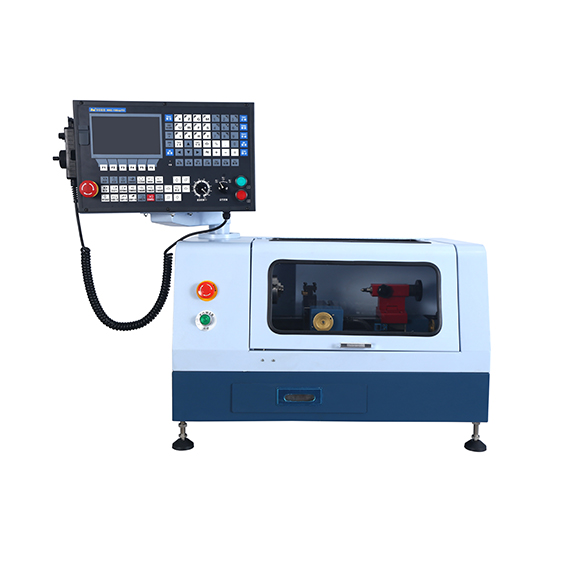
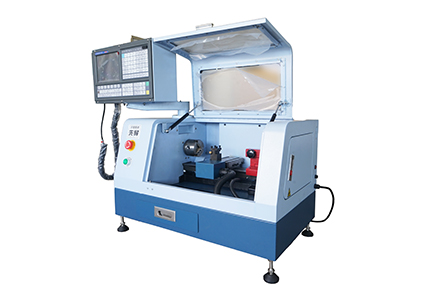
▸High performance 2 axis Lathe CNC controller.| ▸8 inches color screen, interface can be made of parameter selection in both Chinese and English.| ▸The standard spec includes MPG hand wheel.| ▸Selection of high -quality casting materials, more compact, High strength guide way.| ▸Automatic 4 positions tool post.| ▸Controller auto stop work when door open.| ▸High quality 2 axis AC Servor Motor.| ▸USB and RS232 port, DNC function of USB.| ▸Control speed of G code.| ▸Best choice for DIY or Hobby user and Education & Training CNC.|
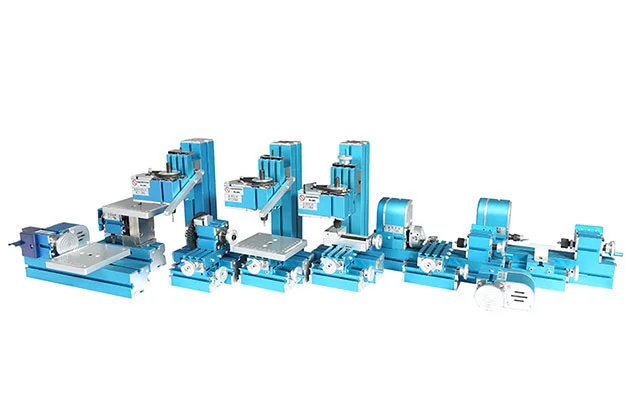
Metal Jigsaw | Metal woodturning Machine| Metal lathe Machine | Metal Milling Machine| Metal Drilling Machine| Metal Sanding Machine| Metal On-hand machine| Metal Drilling machine with dividing attachment


Xendoll has 22 years of experience in the production of small machine tools. We will help you choose the suitable machine and share our experience in CNC machining with you.
 Jul 24, 2026
 Xendoll
 392
392
Keywords: small machining center, desktop machining center, small five‑axis machining center, desktop teaching machining center, five‑axis linkage machining center.
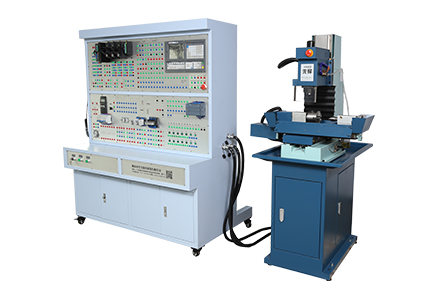
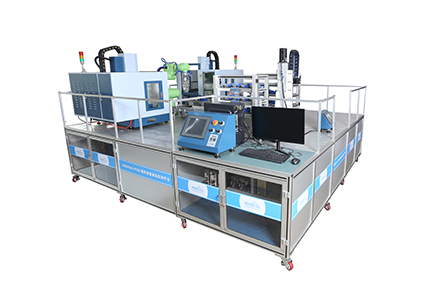
Against the backdrop of smart manufacturing transformation, CNC practical training in vocational colleges is facing a critical juncture of equipment upgrading. With limited floor space, tight budgets, and high demands for teaching adaptability, how to precisely procure small machining centers, desktop 5‑axis equipment, and other teaching tools has become a core issue for procurement officers in these institutions.
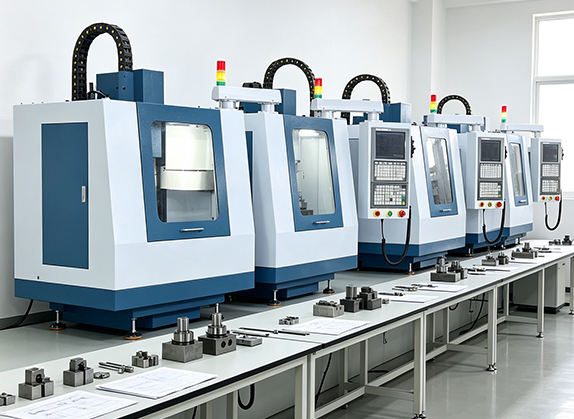
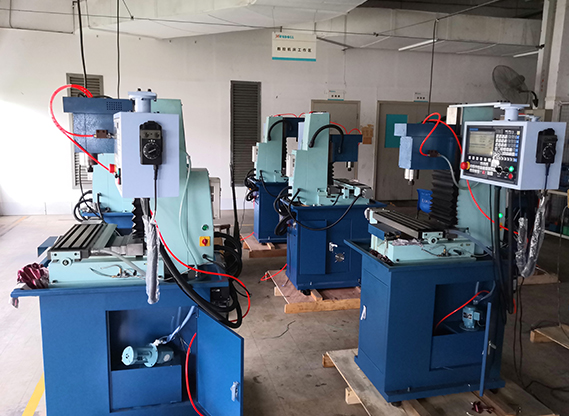
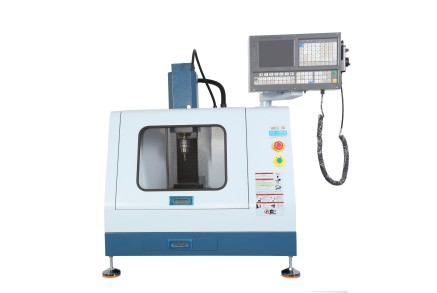
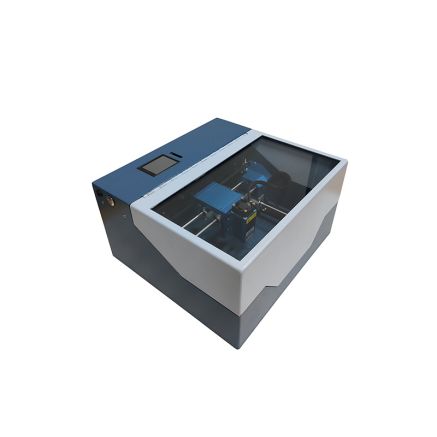
Selecting equipment is essentially selecting “teaching applicability.” Compared with industrial-grade machine tools that often weigh several tons, desktop machining centers occupy only 0.5 square meters, run on standard 220V power, and can be easily placed in ordinary classrooms. Their fully transparent protective enclosures allow students to observe tool paths clearly, greatly reducing the difficulty of instruction. More importantly, these machines support machining of multiple materials such as steel, aluminum, and plastics, are compatible with mainstream CAD/CAM software like MasterCAM and UG, and enable step‑by‑step teaching from 3‑axis to 5‑axis linkage.
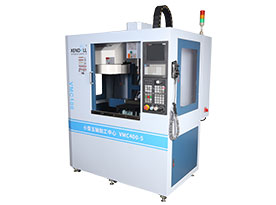
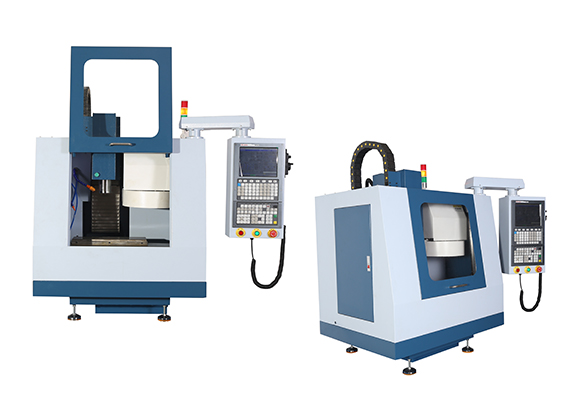
VMC240 Small CNC Machining Center – Technical Specifications
Parameter Value
Maximum drilling diameter:13 mm
Maximum milling diameter:16 mm
Worktable size:400 × 130 mm
X/Y/Z travel:240 / 155 / 260 mm
Spindle speed range:24,000 rpm
Rapid traverse rate:3,000 mm/min
Spindle motor power:1.5 kW
Tool magazine:12‑station umbrella‑type ATC
Power supply:220V / 50Hz
Machine dimensions:1370 × 800 × 1425 mm
Net weight:398 kg
Product Features:
The machine can automatically and continuously perform multiple machining operations on multiple planes, enabling high‑efficiency, high‑quality processing.
It runs on 220V power, occupies little space, consumes low energy, and features a combination of transparent acrylic and sheet metal for improved observation safety while ensuring structural rigidity with full enclosure.
Equipped with an automatic tool changer and a small umbrella‑type magazine that holds up to 12 tools at a time.
Selecting suppliers calls for close attention to technological independence and service closure. Currently, a number of quality manufacturers deeply engaged in the education sector have emerged: for example, Yuneng Equipment is known for transplanting industrial‑grade CNC systems into educational machines, with product lines covering desktop 3‑axis to 5‑axis linkage models and multiple successful bids in college procurement projects; Xiandao Digital has over a decade of experience in developing small machine tools and provides rich supporting teaching resources.
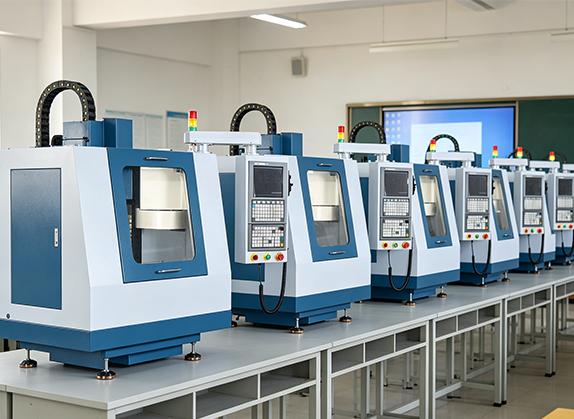
Selection strategy should adhere to the principle of “practical first, moderate forward‑looking.” There is no need to blindly pursue the highest configurations; instead, decisions should be based on the college’s specific program positioning and student level, choosing solutions that offer high cost‑effectiveness and low maintenance costs. It is advisable to refer to procurement cases from peer institutions, arrange on‑site test cutting, and pay special attention to key indicators such as RTCP functionality (core to 5‑axis linkage), tool magazine capacity, and repeat positioning accuracy.
In summary, the rise of miniaturized teaching equipment is bringing advanced CNC technology into ordinary classrooms. By identifying the right match between equipment and teaching needs, and selecting technically sound and service‑oriented partners, colleges can maximize teaching benefits with limited investment.
Welcome to our video link:
YouTube: Xendoll
Facebook: Xendoll
WEB:www.xendolltools.com


 Show all our samples
Provide you with a free quote
Answer all the questions you may have
Guided installation and other options
Show all our samples
Provide you with a free quote
Answer all the questions you may have
Guided installation and other options